

How to Protect Pets from the New World Screwworm
Quick answer: New World screwworm (NWS) is a parasitic fly larva that feeds on the living tissue of warm-blooded animals, including dogs and cats. As of June 22nd, 2026, cases have been confirmed in Texas and New Mexico, but there are no confirmed cases in Michigan or Indiana right now. Pet owners should watch wounds closely and contact a veterinarian right away if they spot maggots, draining sores, or a foul odor.
A parasite the United States once thought to be eradicated back in 1966 has made an unwelcome return. On June 3rd, 2026, the United States Department of Agriculture (USDA) confirmed the first U.S. animal case of New World screwworm in the current outbreak, found in a Texas calf. Since then, animal health officials across the country have moved quickly to keep this dangerous parasite from spreading.
If you live in Michigan or Indiana, here's the reassuring part: there are no reported cases in either state right now. But because screwworms can affect any warm-blooded animal—including dogs and cats—it pays to know what to look for. Veterinarians are watching this situation closely, and a little awareness goes a long way in protecting your pet.
In this guide, you'll learn what New World screwworm is, how it can affect dogs and cats, the warning signs to watch for, and exactly what to do if you suspect an infestation.
What Is New World Screwworm?
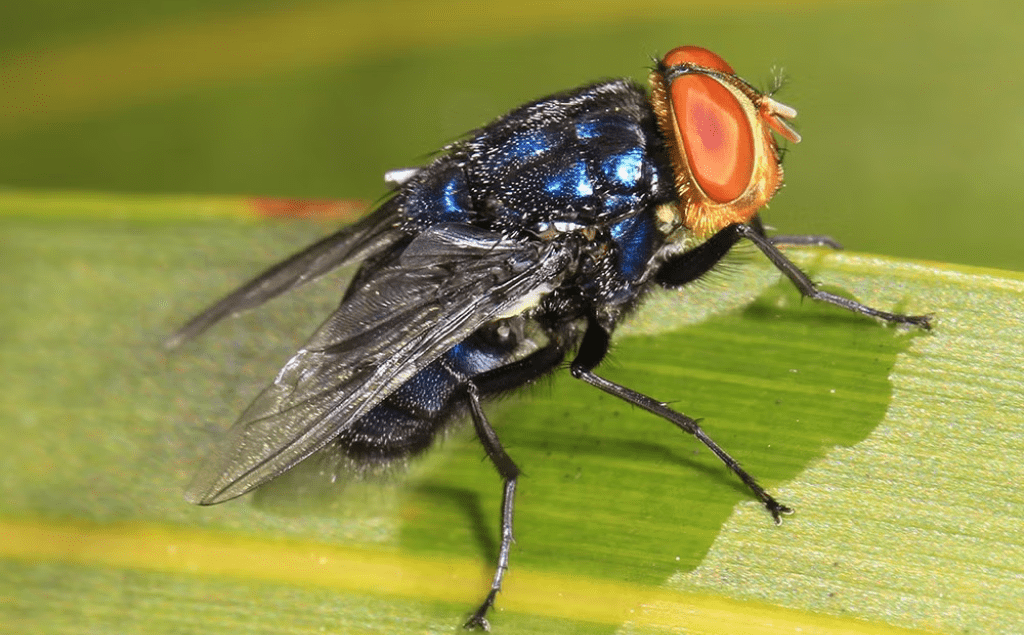
The New World screwworm (NWS) is the larval stage (maggot) of a parasitic fly called Cochliomyia hominivorax. Adult screwworm flies are about the size of a common housefly, with orange eyes, a metallic blue or green body, and three dark stripes along their backs.
Here's how the parasite spreads: female flies are drawn to the smell of open wounds or body openings on warm-blooded animals. They lay their eggs at the edge of a wound, and within hours, the eggs hatch into larvae that burrow into the flesh in a screw-like pattern, hence the name. As the larvae feed, the wound grows larger and deeper, attracting even more flies.
This is what makes NWS such a serious animal health threat. According to the Michigan Department of Agriculture and Rural Development (MDARD), even something as minor as a tick bite can attract screwworm flies.
Left untreated, an infestation can be fatal.
How New World Screwworm Differs from Typical Maggots
You may have heard of "fly strike," where common flies like blowflies or botflies lay eggs on an animal. The key difference comes down to both appearance and what the larvae eat.
Adult New World screwworm flies are metallic blue-green with orange eyes and three dark stripes on their backs, making them distinct from many common flies. More importantly, their larvae behave very differently. Most fly larvae feed on dead or decaying tissue. New World screwworm larvae feed on living flesh.
That distinction matters enormously. Since NWS attacks healthy tissue, it causes far more damage, deeper wounds, and a much higher risk of serious infection.
It's worth noting that not all maggot infestations (a condition called myiasis) are caused by screwworm. Only an entomologist can confirm NWS through analysis, which is exactly why reporting suspected cases to a veterinarian is so important.
Can Dogs and Cats Get New World Screwworm?
Yes. New World screwworms can affect any warm-blooded animal, and that includes both dogs and cats. In fact, the USDA confirmed the first case of NWS in a dog in Lea County, New Mexico on June 8th, 2026. Luckily, the dog survived after receiving veterinary care.
New World Screwworm in Dogs
Dogs can become infected when a screwworm fly lays eggs in an open wound or body opening, such as the nose, ears, or genitals. Common risk factors include recent injuries, surgical sites, scrapes from rough play, and tick bites.
The unsettling truth? Even small wounds can attract flies. A minor cut you might not think twice about could become an entry point. Dogs that spend time outdoors, especially in or near areas with active infestations, face a higher risk.
New World Screwworm in Cats
Cats are equally vulnerable. Outdoor cats, in particular, are prone to scratches, bite wounds, and skin injuries from roaming, fighting, or hunting; all of which can attract screwworm flies.
Because cats are skilled at hiding discomfort, monitoring any skin injury closely is especially important. A wound that seems to be healing slowly, smells off, or appears to be getting worse deserves immediate attention.
Symptoms of New World Screwworm in Dogs and Cats
Catching an infestation early makes all the difference. Keep an eye out for these warning signs:
- Pain or tenderness around a wound
- Excessive licking or scratching at one spot
- Head shaking (often a sign of infestation in the ears)
- Flies hovering around a wound
- Visible maggots near the nose, mouth, ears, or skin
- A foul, rotting odor
- Wounds that rapidly worsen or grow larger
Why Symptoms Can Progress Quickly
Screwworm infestations move fast. A female fly can lay 200-300 eggs at a time. Eggs can hatch within roughly 24 hours, and the newly hatched larvae immediately begin feeding on living tissue. As they burrow deeper, they cause significant tissue destruction and open the door to secondary infections.
This rapid progression is why you should never take a "wait and see" approach. What looks like a small wound today could become a serious medical emergency within a day or two.
Is New World Screwworm in Michigan or Indiana?
There are currently no reported cases of New World screwworm in Michigan or Indiana. In the current outbreak, cases have been detected in Texas and New Mexico, with the first U.S. animal case confirmed in a Texas calf on June 3rd, 2026.
It's also worth knowing that NWS is not a contagious disease that spreads from pet to pet, and it is not a food safety issue. The U.S. food supply remains safe.
What States Are Doing to Prevent Spread
Even without local cases, both states have taken proactive steps to keep screwworm out:
- Michigan: As of June 17th, 2026, MDARD mandates that animals originating directly from an infested premises are prohibited from entering Michigan until that site is officially released from quarantine. The state is also requiring a certificate of veterinary inspection (CVI) and treatment of 5 days from states with known cases.
- Indiana: The Indiana State Board of Animal Health (BOAH) adopted movement restrictions for livestock and companion animals arriving from infested zones. Cats and dogs from those areas must show proof of an effective NWS treatment applied within five days of travel, along with a CVI.
These measures—enhanced inspections, animal movement certificates, and active monitoring by animal health officials—are efforts to catch any threat before it can take hold.
What Should You Do If You Suspect New World Screwworm?
If you notice maggots, a rapidly worsening wound, or any of the symptoms above, call your veterinarian right away. Prompt treatment matters because screwworm damage compounds quickly. A veterinarian’s diagnosis is also essential, since other flies can cause similar-looking infestations that require different care.
Worried it's happening after hours? That's why it's important to know where your nearest emergency vet is before an emergency happens. Whether you’re dealing with a suspected New World screwworm infestation or any other concerning symptom, every minute matters and waiting until your regular veterinarian opens may not be an option.
Do NOT Attempt Treatment on Your Own
It's tempting to want to handle the problem yourself, but please don't. Improperly removing larvae can drive them deeper, cause additional tissue damage, and increase the risk of infection.
Wound care for screwworms should be left to trained veterinary professionals who can treat your pet safely and thoroughly.
Treatment for New World Screwworm in Dogs and Cats
Treatment options have expanded recently. On June 11th, 2026, the FDA issued an Emergency Use Authorization for generic nitenpyram tablets (the active ingredient in products like Capstar) to treat NWS infestations in dogs, puppies, cats, and kittens that weigh at least two pounds and are at least four weeks old. This is the first generic animal drug authorized against NWS.
Nitenpyram works fast, killing most screwworm larvae within hours of the first dose. Pet owners give a second dose six hours after the first. One important caveat: because the medication is short-acting, it treats an existing infestation but does not prevent screwworm or protect against reinfestation.
Other drugs* that have received emergency use authorizations and conditional approvals to treat NWS include the following:
For Dogs:
- Credelio Quattro-CA1 chewable tablets (lotilaner, moxidectin, praziquantel, pyrantel) (Conditional approval)
- Credelio chewable tablets (lotilaner) (FDA EUA)
- NexGard chewable tablets (afoxolaner) (FDA EUA)
For Cats:
- Credelio CAT chewable tablets (lotilaner) (FDA EUA)
- NexGard COMBO (esafoxolaner, eprinomectin, and praziquantel topical solution) (FDA EUA)
*No product currently has full FDA approval for New World screwworm; available options are either conditionally approved or authorized under Emergency Use Authorization (EUA), and veterinarians must inform clients that these products are authorized for emergency use only and discuss risks, benefits, alternatives, and proper recordkeeping requirements.
The FDA also warns that misuse or use of nonauthorized products may contribute to antiparasitic resistance and can pose safety and food residue concerns, as some drugs (including ivermectin in dogs and cats) have not been reviewed for this use.
What Treatment May Involve
Beyond medication, treating screwworm typically involves:
- Physical removal of remaining larvae by a trained veterinary professional
- Thorough wound cleaning and management
- Follow-up care to prevent reinfestation and secondary complications
Your veterinarian will guide you on proper wound care and how to reduce the risk of the problem returning.
How to Help Protect Your Dog or Cat
1. Inspect Wounds Regularly
Make a habit of checking your pet for cuts, scrapes, tick bites, and other skin injuries, especially after time outdoors or travel.
2. Seek Prompt Veterinary Care
Don't wait for the wound to worsen. If something looks off, smells off, or isn't healing the way it should, get it checked immediately.
3. Follow Your Veterinarian's Recommendations
Stay current with parasite prevention and follow your vet's advice on proper wound management.
Key Takeaways
1. What does New World screwworm look like in dogs?
In dogs, screwworm often appears as a draining or enlarging wound that won't heal, sometimes with a foul odor of decay. You may see creamy-white larvae (maggots) near the wound's edges or around body openings like the nose, ears, or genitals. Affected dogs often show pain, excessive licking, or head shaking.
2. What does New World screwworm look like in cats?
In cats, the signs and symptoms are much the same as they are for dogs. Look for non-healing wounds, draining sores, or visible maggots around injuries, the nose, mouth, or ears.
A bad smell and signs of discomfort, such as hiding, irritation, or excessive grooming of one area, can also signal infestation. Outdoor cats with bite or scratch wounds are at higher risk.
3. Is New World screwworm contagious between pets?
No. New World screwworm is not an infectious disease that spreads directly from one pet to another. Animals become infected when a screwworm fly lays eggs in an open wound or body opening, not through contact with another infested animal.
However, if adult flies are present in your area, any pet with an uncovered wound, sore, or surgical site is at risk.
4. Can indoor pets get New World screwworm?
The risk for strictly indoor pets is much lower, since they have far less exposure to screwworm flies. That said, no pet is entirely risk-free if flies make their way indoors. Keeping wounds clean and monitored is smart practice for every pet, indoor or out.
5. Has New World screwworm been found in Michigan or Indiana?
No. As of mid-June 2026, there are no reported cases of New World screwworm in Michigan or Indiana. Currently, confirmed cases in the U.S. outbreak have been limited to Texas and New Mexico. Both states have introduced animal movement requirements as a precaution.
Raising Awareness, Not Alarm
The return of New World screwworm sounds frightening, but here's the bottom line: there are currently no reported cases in Michigan or Indiana, and animal health officials in both states are working hard to keep it that way.
Your best tools are simple; check your pet's wounds regularly, know the warning signs, and never wait on a wound that looks or smells wrong. If you ever spot maggots, a rapidly worsening sore, or any sign that something isn't right, contact a veterinarian immediately. For after-hours worries, our independent emergency veterinary team is always here to help, day or night.
When it comes to your pet's health, trusting your instincts and acting fast is always the right call.
Recent Posts
About Us
At Emergency Veterinary Care Centers (EVCC), we know that pet emergencies are unpredictable and often stressful. That's why our team, with over 20 years of emergency and critical care experience, is ready to assist you and your pet in the toughest situations.