

My Dog Was Hit by a Car. What Do I Do?
Quick answer: If your dog is hit by a car, stay calm, approach carefully to avoid bites, muzzle if needed, and transport them to an emergency vet immediately—even if they seem fine. Internal injuries and shock can be invisible at first and become life-threatening within hours.
There are few moments that are as terrifying as watching your dog get struck by a car. Your heart drops, your mind races, and you're faced with a situation where every second matters. Knowing what to do (and what not to do) can mean all the difference for your pet.
This blog will walk you through exactly how to respond, from the moment of impact to the emergency vet visit. You'll also learn how to spot signs that your dog may have been hit while you weren't watching, and what steps you can take to prevent it from ever happening again.
How to Safely Approach an Injured Dog After a Car Accident
According to recent auto insurance data, dogs are the third most frequently struck animal behind deer and rodents. An injured dog—even the most gentle, well-trained one—may bite out of fear and pain. Before you rush in, assess the situation. Make sure the road is clear and that it's safe for you to approach.
Move toward your dog slowly and speak in a calm, low voice. Avoid making sudden movements. If your dog is conscious, watch their body language for signs of fear or aggression, such as flattened ears, growling, or snapping.
Should You Muzzle Your Dog?
If your dog is snapping or appears highly distressed, improvising a muzzle from a leash, tie, or strip of fabric can protect both of you. Loop it over the snout, tie it under the chin, then behind the ears.
Never muzzle a dog that is vomiting, having difficulty breathing, or is unconscious.
How to Transport an Injured Dog Without Making Injuries Worse
Spinal and internal injuries are common after car accidents, and improper handling can make them significantly worse. Here's how to move your dog safely:
- Small dogs: Gently scoop them up, supporting both the chest and hindquarters. Keep their body as flat and still as possible.
- Large dogs: Slide a firm, flat surface, like a board, a car mat, or even a folded jacket, underneath them to use as a makeshift stretcher. Enlist help if available.
It’s important to remember to avoid flexing or twisting the spine. Keep your dog's body in a neutral position throughout transport.
Once you have secured them, get to an emergency veterinary hospital immediately. Call ahead if you can, so the team is ready when you arrive.
What Injuries Are Common When a Dog Is Hit by a Car?
The severity of injuries varies widely depending on the speed of the vehicle and the size of the dog. Common injuries include:
- Broken bones, particularly to the legs and pelvis
- Internal bleeding from organ damage—often invisible from the outside
- Traumatic brain injury from impact with the vehicle or ground
- Pneumothorax (collapsed lung), which can cause rapid, shallow breathing
- Lacerations and road rash
- Spinal cord damage, which may cause partial or full paralysis
- Ruptured bladder
While some of these injuries are immediately obvious, others are not.
Warning Signs That Require Emergency Veterinary Care Right Away
Even if your dog is standing and appears alert after a collision, do not assume they are uninjured. These are red flags that require urgent attention:
- Pale, white, or bluish gums
- Rapid or labored breathing
- Bleeding that doesn't stop
- Inability to stand or walk
- Collapse or loss of consciousness
- Distended or hard abdomen
- Crying or whimpering when touched
- Glazed eyes or disorientation
Shock is a particularly dangerous and deceptive condition. A dog in shock may initially appear calm or even normal before deteriorating rapidly. Additionally, many dogs can run away after an accident and appear “fine.” This is actually deceptive, as adrenaline can mask severe injuries.
This is why a veterinary evaluation after any car accident is non-negotiable, regardless of how your pet looks or seems.
Why You Should See a Vet (Even If Your Dog Seems Fine)
This is where many well-meaning pet owners make a critical mistake. Internal bleeding, organ damage, and traumatic shock can all develop or worsen over the hours following an accident, with few external signs early on.
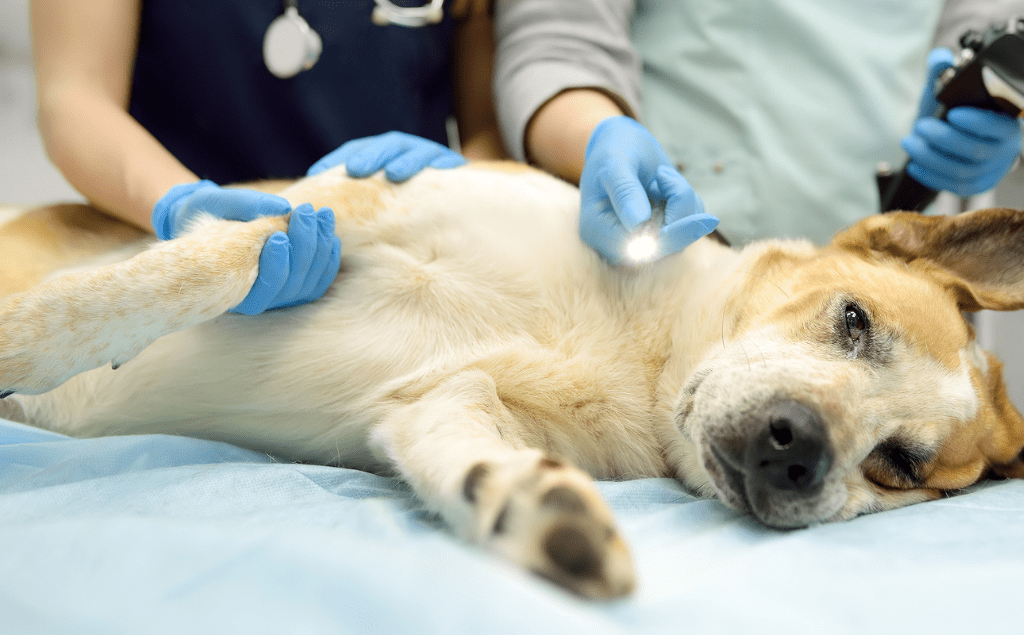
A thorough veterinary evaluation typically includes physical examination, X-rays, and sometimes ultrasound to check for internal injuries. Blood tests may be run to assess organ function. Catching these problems early dramatically improves the chances of a full recovery.
Think of it this way: the cost of a precautionary vet visit is nothing compared to what delayed treatment can mean for your dog's life.
How to Tell If Your Dog Was Hit by a Car Without You Seeing It
Dogs sometimes escape the yard or slip their leash, disappear for a period of time, and return home. If your dog comes back and something seems off, a car accident may be the cause.
Signs to watch for include:
- Limping or reluctance to bear weight on a limb
- Pale gums
- Scrapes, cuts, or missing fur (road rash)
- Swelling around the face, limbs, or abdomen
- Bruising, which may not be visible through fur but can be felt as heat or swelling
- Unusual lethargy or withdrawal
- Rapid or labored breathing
- Crying when touched in specific areas
If your dog went missing and returned with any of these signs—or just seems "not right"—contact your vet or an emergency vet immediately. Trust your instincts; you know your pet better than anyone!
What to Expect During an Emergency Vet Visit
Arriving at an emergency veterinary clinic can feel overwhelming, especially when you're scared for your pet's life. Knowing what to expect can help you stay focused.
When you arrive, staff will perform a rapid triage assessment to determine how critical your dog's condition is. From there, the veterinary team may:
- Stabilize your dog with IV fluids, oxygen, or pain relief
- Run diagnostics including bloodwork, X-rays, and ultrasound
- Perform emergency procedures if there is internal bleeding or a collapsed lung
- Recommend surgery for broken bones or organ damage
- Monitor overnight for delayed onset of shock or internal complications
Owners can help accelerate care by providing a brief history of what happened, when the injury occurred, any medications their dog is taking, and any pre-existing medical conditions. During the initial assessment and stabilization period, owners may not be able to remain with their pet while the veterinary team provides critical care.
While we realize this is stressful, please know that this allows the team to focus on rapid evaluation and treatment. You may also be asked to approve initial stabilization costs and make decisions about CPR or DNR preferences should those situations arise. Clear communication during these early moments helps the team provide the best possible care as quickly as possible.
Throughout this process, you will remain informed while the team walks you through all your options. At Emergency Veterinary Care Centers (EVCC), our experienced emergency vets are available when most are not, so your pet receives dedicated care the moment they need it most.
How to Prevent Your Dog from Being Hit by a Car
Prevention is always the best form of care. A few simple habits can drastically reduce the risk:
- Use a leash every time you're near a road, no matter how well-trained your dog is
- Secure your yard with proper fencing that your dog cannot jump over or dig under
- Avoid retractable leashes near traffic—they give dogs too much uncontrolled range
- Use reflective gear on evening walks so drivers can see your dog clearly
- Microchip your dog and keep tags updated so they can be identified if lost
- Confine your dog before opening the door for guests, if they tend to try to escape
Key Takeaways
1. What should I do first if my dog is hit by a car?
Ensure the road is clear, then approach your dog slowly and calmly. Muzzle them if needed to avoid being bitten from fear or pain. Keep their body still and flat, transport them on a firm surface if possible, and go directly to the nearest emergency veterinary hospital. Call ahead if you can.
2. My dog got hit by a car but seems okay. Should I still take them to the vet?
Yes. Internal bleeding, organ damage, and traumatic shock can all develop with few visible signs in the hours after impact. A dog may appear calm or walk normally and still have life-threatening injuries. Always seek a veterinary evaluation after any car collision, even if your dog seems uninjured.
3. Should I muzzle my dog after it gets hit by a car?
You may need to muzzle an injured dog if they are fearful or attempting to bite. However, never muzzle a dog that is unconscious, vomiting, or having difficulty breathing.
4. My dog ran away and came back. How do I know if my dog was hit by a car while they were gone?
Look for road rash (scrapes or missing fur), limping, swelling, bruising, labored breathing, lethargy, or crying when touched. If your dog was missing and returned with these signs—or simply doesn't seem like themselves—contact a vet immediately.
5. How long after being hit by a car can symptoms appear in dogs?
Some symptoms, particularly from internal bleeding or shock, may not become apparent for several hours after the accident. This is why immediate veterinary evaluation is critical, regardless of how your dog appears right after the incident.
6. What happens at the emergency vet after a dog is hit by a car?
The veterinary team will perform a triage assessment, stabilize your dog if necessary, and may recommend diagnostics such as X-rays, ultrasound, and bloodwork to identify injuries and determine the best treatment plan.
7. Is it safe to move a dog that has been hit by a car?
Moving an injured dog is necessary but must be done carefully. Use a flat, rigid surface as a stretcher to minimize spinal movement. Keep their body in a neutral position and avoid twisting or flexing the spine. If possible, get help from another person.
8. How can I prevent my dog from being hit by a car?
Always use a leash near roads, maintain secure fencing, avoid retractable leashes in high-traffic areas, use reflective gear during nighttime walks, and keep your dog's identification tags and microchip information up to date.
Additionally, please secure your dog while welcoming guests into your home if your dog tends to slip outdoors.
When Your Dog Needs Emergency Care, We're Here
A car accident is one of the most stressful events a pet owner can face. But acting quickly and calmly and knowing what to do before the moment arrives gives your dog the best possible chance.
If your dog has been hit by a car, don't wait to see if they improve on their own. Reach out to your local Emergency Veterinary Care Centers (EVCC). Our veterinary teams are entirely focused on emergency veterinary medicine and are ready to provide life-saving care when every second counts.
Recent Posts
About Us
At Emergency Veterinary Care Centers (EVCC), we know that pet emergencies are unpredictable and often stressful. That's why our team, with over 20 years of emergency and critical care experience, is ready to assist you and your pet in the toughest situations.