


My Dog Has Fleas: Now What?
You are petting your dog after a long walk when you suddenly spot a tiny, dark speck darting through their fur. Panic sets in. Finding fleas on your pet is highly stressful for any pet parent. You want to protect your pet and your home, and you want those pests gone immediately.
Dealing with a flea infestation requires a quick, comprehensive approach. These resilient parasites multiply rapidly, making a minor nuisance potentially escalate into a full-blown problem for your pet and your household. But you do not need to face this alone.
This guide will walk you through exactly what to do when you discover fleas on your dog. We will cover how to identify an active infestation, the most effective treatment options for your pet and your home, and the hidden health risks you need to watch out for.
Most importantly, you will learn exactly when those tiny bites turn into a medical emergency requiring immediate veterinary care.
How to Tell If a Dog Has Fleas
How can you be certain your dog actually has fleas? Sometimes, the signs are subtle before the infestation becomes severe.
Keep a close eye out for these key indicators:
1. Relentless Itching and Scratching
Occasional scratching is normal behavior for dogs. However, sudden, frantic, or continuous scratching, chewing, or biting at the skin is a major red flag.
Dogs typically target their hindquarters, the base of their tail, and their belly when fleas are present.
2. The Presence of Flea Dirt
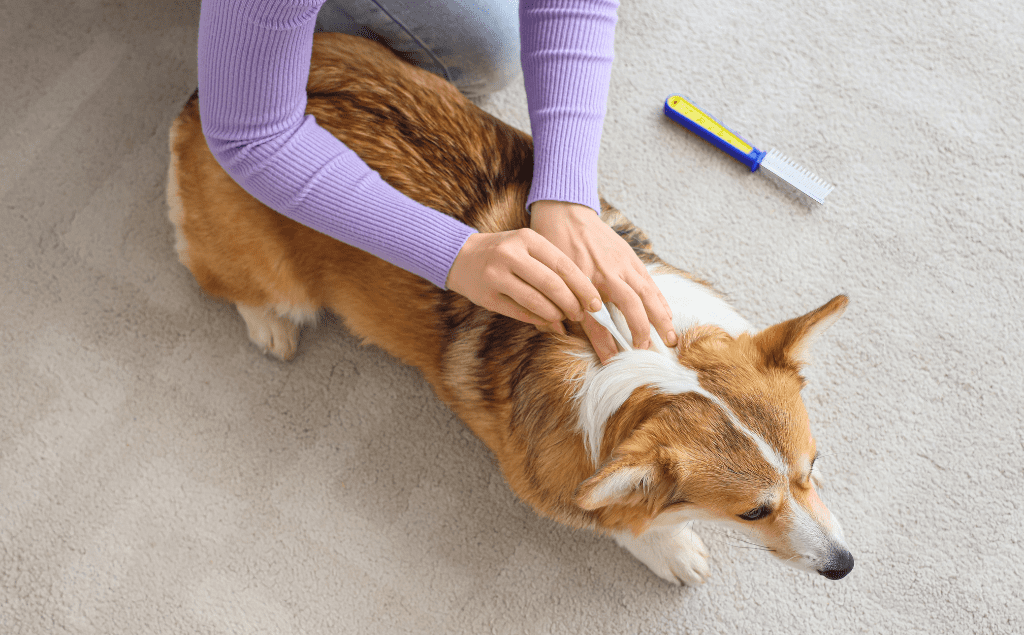
Take a close look at your dog's skin by parting their fur. Do you see tiny black specks that resemble finely ground black pepper? This is commonly known as "flea dirt," which is flea feces composed of digested blood.
If you place these specks on a damp white paper towel and they turn a reddish-brown color, you are definitively dealing with fleas.
3. Visible Fleas on the Skin
Adult fleas are very small, wingless insects that appear dark brown or black. They move astonishingly fast and can jump significant distances. You are most likely to spot them scurrying across your dog's sparsely haired areas, such as the armpits, groin, or lower belly.
Are Flea Shampoos Safe for Your Pet?
Finding fleas on your dog can be frustrating, and many people’s first instinct is to reach for a flea bath. While flea shampoos used to be commonly recommended, veterinary medicine has largely moved away from this approach (especially cats), due to safety concerns and the availability of safer, more effective alternatives.
Many over-the-counter flea shampoos and dips contain insecticides that can be harsh on pets, including pyrethrins/pyrethroids, permethrin, organophosphates, and carbamates. While some dogs may tolerate certain ingredients, these products can still cause skin irritation or more serious reactions.
Cats, however, are extremely sensitive to many of these chemicals. Exposure—even indirectly, such as grooming a dog that has been treated—can lead to serious toxicity. Additionally, flea shampoos only provide temporary relief and do not address the full flea life cycle, making reinfestation likely.
For safe and effective flea control, it’s best to avoid home remedies and harsh over-the-counter treatments and instead use veterinarian-recommended preventatives tailored to your pet.
Treating Your Home Environment
Treating your dog is only half of the battle. For every adult flea you see on your pet, dozens of eggs, larvae, and pupae can be hidden throughout your home.
It can take at least 3 months to fully break the flea's life cycle, so you may continue to see live fleas even during treatment. If you skip treating your environment, reinfestation is inevitable.
1. Wash All Bedding
Gather your dog's bed, your own bed sheets, blankets, and any soft toys your pet frequently uses. Wash everything in the hottest water possible to destroy fleas at all stages.
2. Vacuum Thoroughly and Frequently
Vacuum your carpets, rugs, and upholstered furniture meticulously. Pay special attention to dark spaces under furniture, along baseboards, and anywhere your dog likes to sleep.
Once you finish vacuuming, immediately empty the canister or throw away the vacuum bag outside. You will need to repeat this process every few days until the infestation is completely resolved.
3. Consider Environmental Treatments
For severe infestations, you may need to use premise sprays or contact a professional pest control service.
Treating your yard, especially shaded areas where your dog rests, can also prevent outdoor fleas from hitching a ride back inside.
Hidden Health Risks Associated with Fleas
Fleas are not just an itchy annoyance. They pose significant health threats to your dog that require vigilant monitoring.
1. Flea Allergy Dermatitis (FAD)
Some dogs are highly allergic to saliva in a flea bite. Just one or two bites can trigger flea allergy dermatitis, causing intense, agonizing itching. This leads to hair loss, raw skin, and significant discomfort.
2. Secondary Skin Infections
When a dog scratches and chews endlessly at flea bites, they break the surface of the skin. These open wounds easily become infected with bacteria, leading to hot spots, oozing sores, and foul odors that require antibiotics to heal.
3. The Risk of Anemia
Because fleas feed on blood, heavy infestation can cause dangerous blood loss, particularly in puppies, elderly dogs, or small breeds. This condition, known as anemia, can be life-threatening if left untreated.
4. Transmission of Tapeworms
If your dog bites at an itchy spot and accidentally swallows an infected flea, they can contract tapeworms. These internal parasites attach to the dog's intestines, absorbing nutrients, and causing weight loss or digestive distress.
You might notice small, rice-like segments around your dog's hindquarters if they have a tapeworm infection.
When to Go to an Emergency Vet for Fleas
While many flea infestations can be managed at home with prompt treatment, some situations escalate quickly and require immediate veterinary attention. Knowing the difference can protect your dog from serious complications.
Seek emergency care right away if you notice any of the following signs and symptoms of fleas in dogs:
- Signs of anemia, such as pale gums and severe lethargy or weakness
- Intense skin damage or infection
- Extreme allergic reaction (flea allergy dermatitis)
- Persistent vomiting, weight loss, or signs of tapeworms
- Symptoms that are worsening despite treatment
Fleas may be tiny, but the problems they cause can escalate quickly. Trust your instincts. If something feels off, it is always better to have your dog evaluated right away.
Key Takeaways
1. How long does it take to get rid of fleas on my dog?
Getting rid of fleas is not instant. While treatments can kill adult fleas within hours, it can take 3 to 4 months (or even longer) to fully eliminate an infestation due to the flea life cycle (eggs, larvae, pupae, and adults). That’s why consistency with treatment is key.
2. Can fleas live in my house even after treating my dog?
Yes. In fact, most of the flea population lives in your home, not on your pet. Flea eggs, larvae, and pupae can hide in carpets, furniture, and bedding.
This is why cleaning your environment is just as important as treating your dog.
3. Do I need to treat all pets in my household?
Absolutely. If one pet has fleas, assume all pets (including cats) have been exposed. Treating only one pet can lead to reinfestation and prolong the problem.
Be cautious when applying flea preventatives containing pyrethrins or permethrins to your dog, as these are toxic to cats and can transfer through contact or grooming.
4. Can my dog get fleas even if they stay indoors?
Yes. Fleas can hitch a ride into your home on people, other pets, or even items like clothing and shoes. Indoor dogs are still at risk without preventative care.
5. Are over-the-counter flea treatments effective?
Over-the-counter options are less effective than prescription treatments, and in some cases, fleas have developed resistance to certain products.
There have also been instances where pets experienced toxic reactions even when a product was used at the labeled dose, particularly with medications purchased online from unverified sources. For this reason, it’s not recommended to buy flea treatments online without a veterinary prescription.
6. Can fleas bite humans?
Yes. While fleas prefer animal hosts, they will bite humans if given the opportunity. These bites often appear as small, itchy red bumps, typically around the ankles or lower legs.
7. What are the first signs of fleas on a dog?
The earliest signs often include increased scratching, biting the skin, or restlessness. You may also notice flea dirt (black specks) or, in some cases, actual fleas moving through your dog’s fur.
8. When should I worry about fleas becoming dangerous?
Fleas become dangerous when they lead to complications like anemia, severe skin infections, or allergic reactions.
If your dog shows signs like pale gums, extreme lethargy, open sores, or worsening symptoms, seek veterinary care immediately.
9. How can I prevent fleas in the future?
The best prevention is consistent, year-round flea control using veterinarian-recommended products.
Regular cleaning, grooming, and checking your dog after outdoor activities can also help reduce risk.
Keeping Your Dog Happy, Healthy, and Flea-Free
Prevention is always the best medicine. Keeping your dog on a year-round flea preventative ensures that a stray bug from the dog park never turns into a household nightmare.
However, emergencies still happen. If your dog has pale gums, extreme lethargy, or severe skin infections from fleas, seek immediate veterinary care. For severe flea complications, or if you’re unsure, reach out to us today. We’re here when your dog needs us most.
Recent Posts
About Us
At Emergency Veterinary Care Centers (EVCC), we know that pet emergencies are unpredictable and often stressful. That's why our team, with over 20 years of emergency and critical care experience, is ready to assist you and your pet in the toughest situations.