

'Tis the Season… to Keep Pets Safe: 6 Holiday Hazards to Watch For
The holiday season is here; a time of joy, reunion, and celebration. As we fill our homes with lights, decorations and scents of pine and cinnamon, it’s easy to forget how these changes look to our pets.
To a curious cat, a Christmas tree becomes a climbing gym. To a food-driven dog, a low ornament can seem like a chew toy. All the new sights, smells, and décor can quickly turn your festive home into a landscape of potential pet hazards. In fact, search terms like “holiday dangers for pets” and "ER vet" spike significantly during the holidays, especially around Thanksgiving and the last two weeks of the year.
As pet owners, we know you prioritize the health and well-being of your furry family members above all else. The last place anyone wants to spend a holiday is at the emergency vet. By taking a few proactive steps and keeping mindful of your decor, you can ensure the season remains festive for everyone; pets included!
1. The Christmas Tree: A Centerpiece or a Hazard?
Are Christmas trees toxic to dogs? How can I keep my cats out of the Christmas tree?
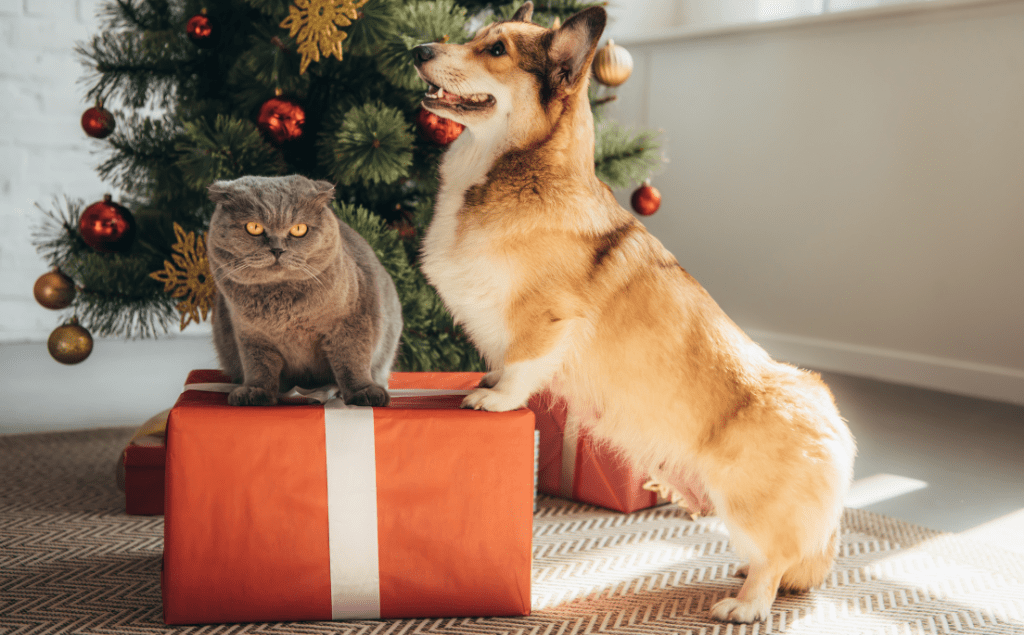
We answer questions like this frequently and answer it like this: the Christmas tree is often the heart of many homes’ holiday decor, but it can pose several risks to cats and dogs.
The Danger of Tinsel and Ribbons
It might look beautiful reflecting the lights, but tinsel is one of the most dangerous items for pets, particularly cats. The shiny, stringy texture is irresistible to felines.
If ingested, tinsel doesn’t usually pass easily through the digestive system. It can wrap around the base of the tongue or bunch up in the intestines, causing an “intestinal blockage” or "linear foreign body" obstruction. This is a life-threatening situation that almost always requires emergency surgery.
Vet Tip: Skip the tinsel entirely. If you must use ribbons on gifts, keep them stored until the moment of opening, and dispose of them immediately.
Tree Water and Needles
Whether you have a real or artificial tree, hazards exist at the base.
- Tree Water: The water in a tree stand can become a breeding ground for bacteria. Furthermore, many people add fertilizers or preservatives to the water to keep the tree fresh. If your dog or cat drinks this, it can cause significant stomach upset or poisoning.*
- Pine or Artificial Needles: Fallen pine needles are sharp. They can puncture paws and, if swallowed, irritate the lining of the stomach or intestines.
Consider using a tree skirt to cover the water basin and sweeping up fallen needles daily. If your pet is persistent, try a pet gate around the tree. Or apply a deterrent like non-toxic bitter apple spray to the stand area to discourage curious noses.
*If you believe your pet has ingested something toxic or is showing signs of illness, contact your emergency vet immediately. You may also call the ASPCA Animal Poison Control Center (APCC) Hotline at (888) 426-4435 for guidance (a consultation fee may apply).
2. Deck the Halls (But Watch the Holiday Plants)
Traditional holiday flora is beautiful, but much of it is highly toxic to our four-legged friends. Before you hang that sprig of greenery, it is crucial to know what species you are bringing into your home.
Lilies
While more associated with Easter, lilies can often appear in holiday bouquets. It cannot be overstated: Lilies are lethal to cats. Even pollen, or drinking the water from the vase, can cause acute kidney failure in a matter of days. If you own a cat, never allow true lilies into your home.
Mistletoe and Holly
Kissing under the mistletoe is a sweet tradition, but eating it is a medical emergency for both dogs and cats. Both mistletoe and holly berries contain toxins that can cause severe drooling, vomiting, diarrhea, and abdominal pain. In large amounts, mistletoe can cause low blood pressure and even collapse.
Vet Tip: Opt for high-quality artificial silk plants. They look just as festive, last for years, and pose zero toxicity risk to your pets.
3. Lights, Cords, and Electrical Dangers
We love the warm glow of holiday lights, but the cords that power them look suspiciously like chew toys to bored or anxious pets.
Puppies and kittens are especially prone to chewing on electrical cords. This can result in burns to the mouth, fluid accumulation in the lungs, or severe electrical shock.
- Secure the Cords: Tape cords down to the floor or wall, so they don't dangle.
- Use Deterrents: Coat exposed cords in bitter apple spray designed for pets.
- Unplug: Always unplug lights when you are not in the room or when you go to sleep.
4. Ornaments
Beyond the tree and the plants, general decorations can pose unexpected threats.
Glass Ornaments
Fragile glass ornaments can shatter easily if knocked off a branch by a wagging tail or a swiping paw. The resulting shards can cause deep lacerations to paw pads or, if chewed, severe damage to the mouth and digestive tract. Place fragile ornaments near the top of the tree, and stick to shatterproof, plastic, or wooden ornaments near the bottom.
Salt Dough Ornaments
Many families make homemade ornaments using salt dough. While they are cute keepsakes, they are essentially made of salt and flour. Dogs who eat these can suffer from salt toxicity, which causes dangerous neurological symptoms, including seizures.
5. Winter Walks and Chemical Concerns
Keeping pets safe isn't just about what is inside the house. The winter season brings outdoor hazards that every responsible owner should be aware of.
The Danger of Antifreeze
Ethylene glycol, commonly known as antifreeze, is a staple in colder months. Unfortunately, it has a sweet taste that attracts dogs and cats. Even a tiny amount—less than a teaspoon for a cat—can be fatal, causing rapid kidney failure.
If you spill antifreeze in your garage or driveway, clean it up immediately and thoroughly. If you suspect your pet has licked a puddle of antifreeze, do not wait for symptoms to appear. Seek emergency veterinary care immediately.
Ice Melts and Salts
Sidewalks and roads are often treated with salt and chemicals to melt ice. These substances can be irritating to your pet's paw pads, causing cracking and bleeding. Furthermore, when your pet comes inside, they may lick their paws to clean them, ingesting the chemicals.
Vet Tip: Wipe your dog’s paws with a damp towel after every walk. Alternatively, consider using pet-safe booties to protect their feet.
6. Managing Stress and Anxiety
The holidays often mean houseguests, parties, and disrupted routines. While we tend to enjoy the social aspect, our pets may find this stressful.
A nervous dog might bolt through an open door as guests arrive. A stressed cat might stop eating or develop urinary issues.
- Create a Sanctuary: Set up a quiet room away from the noise where your pet can retreat. Include their bed, fresh water, and favorite toys.
- Monitor the Doors: As guests come and go, ensure your pets are secured so they don't slip out into the cold.
We Are Here When You Need Us
If you notice your pet behaving strangely, vomiting, lethargic, or in pain this holiday season, do not hesitate. Our independent network of emergency veterinary hospitals provides personalized, compassionate care when you need it most.
We are open* 24 hours a day, 7 days a week, 365 days a year, including all holidays. You never have to worry about whether help is available. We are your pet's emergency lifeline, offering the dedicated care your furry family members deserve, any time of day or night.
*Some locations may not be 24/7 yet. Always check specific hospital hours before coming in.
Recent Posts
About Us
At Emergency Veterinary Care Centers (EVCC), we know that pet emergencies are unpredictable and often stressful. That's why our team, with over 20 years of emergency and critical care experience, is ready to assist you and your pet in the toughest situations.