

What Every Dog Owner Needs to Know about Parvovirus
There's nothing more worrying than seeing your beloved dog suddenly fall ill. One day they are a bundle of playful energy, and the next they are lethargic, refusing to eat, and showing signs of distress. When your puppy throws up and seems unwell, it’s natural to feel a surge of panic. While several conditions can cause these symptoms, one of the most serious is Canine Parvovirus.
Understanding this dangerous illness is the first step toward protecting your furry family member. This guide will walk you through what Parvo is, how it spreads, and the critical signs to watch for.
We will cover how it's diagnosed and treated, and most importantly, what you can do to prevent it. Knowing this information can make all the difference in ensuring your dog lives a long, healthy life.
What Is Canine Parvovirus?
So, what is parvo in dogs? Canine Parvovirus, commonly known as "Parvo," is a highly contagious and often life-threatening viral illness. It primarily attacks the rapidly dividing cells in a dog's body, most severely affecting the intestinal tract and bone marrow.
When the virus invades the intestinal lining, it prevents the dog from absorbing essential nutrients, leading to severe vomiting and diarrhea that results in severe dehydration, nutrient loss, and weakness. The damage to the intestinal wall can also allow bacteria to leak into the bloodstream, causing a widespread infection known as sepsis.
Simultaneously, the attack on the bone marrow suppresses the production of white blood cells, which are crucial for fighting infection. This combination leaves a dog, especially a young puppy, extremely vulnerable and critically ill.
How Is Parvo Transmitted?
Parvo is incredibly resilient and can survive in the environment for months, even in harsh conditions. It spreads through direct contact with an infected dog or, more commonly, through contact with contaminated feces.
A dog can pick up the virus from anywhere in the environment that has been contaminated:
- A public park
- Kennel surfaces
- Food and water bowls
- Collars and leashes
- The hands and clothing of people who have handled an infected dog
Because the virus is so hardy and easily spread, it's a concern for any unvaccinated dog or puppy.
Symptoms of Parvo
Recognizing the symptoms of Parvo early is crucial for a successful outcome. The signs can appear suddenly and escalate quickly. If you notice any of the following, especially in a young puppy, you should seek immediate veterinary care.
Key parvo symptoms in puppies and adult dogs include:
- Severe, often bloody diarrhea: This is one of the most distinctive signs.
- Vomiting: A common question we hear is, "why is my puppy throwing up?" While many things can cause vomiting, when combined with other symptoms on this list, it's a major red flag for Parvo.
- Lethargy or extreme tiredness: Your puppy may lose all interest in playing.
- Loss of appetite: Refusing to eat or drink is a serious warning sign.
- Fever or low body temperature (hypothermia).
- Abdominal pain and bloating.
The most critical period for a dog with Parvo is often the first 24 hours. Puppies between one and three months old are at the highest risk, as are certain breeds* like Rottweilers and Doberman Pinschers.
*Any dog regardless of their breed or age (especially those that are unvaccinated) is susceptible to the disease.
Diagnosis and Treatment
If you suspect your dog has Parvo, a veterinarian will perform a physical exam and likely run a specific test on a fecal sample to detect the virus.
However, although rare, it's important to understand that a dog can test negative despite showing symptoms, especially in the early stages when the virus might not be present in high enough levels to be detected. For this reason, treatment is often based on the dog's clinical signs, not just the test result.
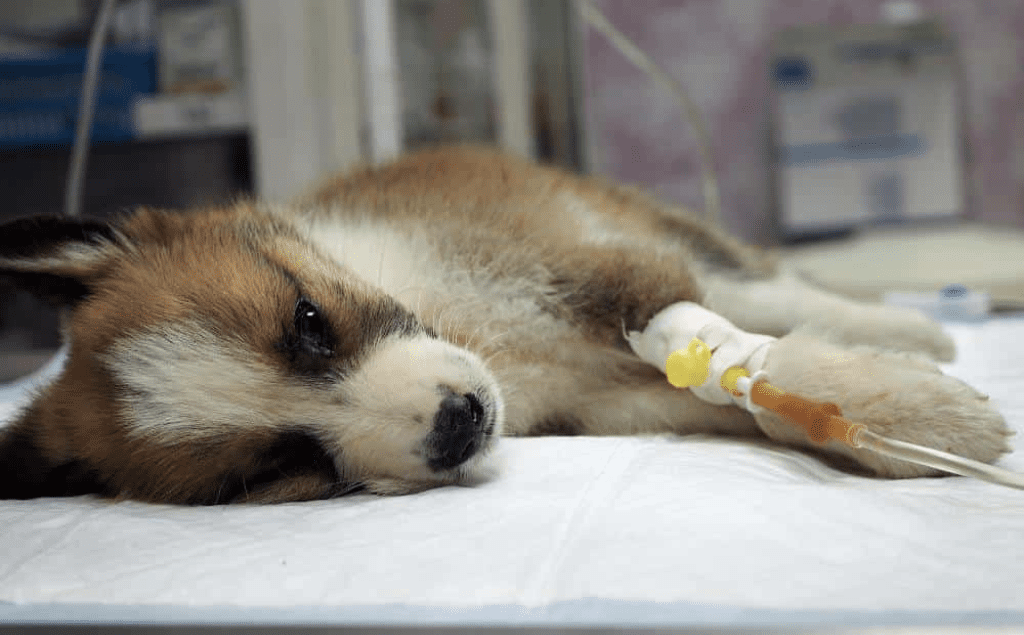
While there is no cure that kills the virus itself, parvo can absolutely be successfully treated with early intervention. Typically, treatment focuses on intensive supportive care, usually involves:
- Intravenous (IV) fluids to combat dehydration and electrolyte imbalances.
- Anti-nausea medications to control vomiting.
- Antibiotics to prevent secondary bacterial infections like sepsis.
- Nutritional support, often through a feeding tube if the dog cannot eat on its own.
While expensive, hospitalization is almost always necessary to provide this level of care. Your puppy may need 3 to 5 days in the hospital to recover, in which they will be hospitalized in an isolation ward.
With immediate and aggressive treatment, the parvo treatment success rate is promising at around 70-90%. The survival rate dramatically lowers for dogs who do not receive treatment.
Outpatient Support for Parvo Patients
Because parvo is a severe and often life-threatening illness, outpatient treatment is typically not recommended. Hospitalization allows for intensive care, such as IV fluids, anti-nausea medication, and nutritional support, that dogs need to heal.
However, financial constraints are a very real and understandable reality for many pet owners. If you have elected continuing outpatient care for your dog, follow your veterinarian's instructions very carefully. This may include administering prescribed medications on schedule, offering a bland or special diet to help your dog regain strength, and keeping them isolated from other dogs until they’re fully cleared.
You’ll also need to thoroughly clean and disinfect your home and yard using products proven to kill Parvovirus on surfaces, as the virus can survive in the environment for months. Regularly wash bedding, bowls, and toys with a 1:30 mix of diluted bleach and hot water and limit your dog’s exposure to other animals during recovery.
Remember that even with thorough cleaning, it is not recommended to bring puppies younger than 8 weeks of age into the home. With patience, strict hygiene, and close communication with your vet, recovery at home, while challenging, can still give your pet the best chance to survive.
The New Parvovirus Monoclonal Antibody Injection
The parvovirus monoclonal antibody injection is a breakthrough treatment for dogs diagnosed with parvovirus infection. It works by giving your dog’s immune system a “head start” in fighting the virus.
The antibodies in the injection attach directly to the parvovirus, helping the body neutralize and remove it more efficiently.
How It Differs from Traditional Treatment
Traditional treatment for parvovirus has focused solely on supportive care, managing symptoms such as vomiting, diarrhea, dehydration, and the risk of secondary infections while the dog’s own immune system works to overcome the virus. This often requires several days of hospitalization with IV fluids, antibiotics, and anti-nausea medications.
In contrast, the monoclonal antibody injection is the first treatment that directly targets the virus itself. When administered early in the course of infection, it can help reduce the severity and duration of illness, giving dogs a better chance at a quicker recovery.
What to Expect:
- It’s given as a single IV injection under veterinary supervision.
- Your pet will still need supportive care such as fluids and anti-nausea medication.
- In studies, dogs treated with this injection have shown improved survival rates and faster recovery times compared to those receiving supportive care alone.
- Like all treatments, it may not work in every case, but it represents a significant advancement in helping dogs recover from parvo.
In short, this new injection is an innovative, targeted therapy that works with supportive care to give infected dogs the best possible chance of recovery. Early detection and prompt treatment are still critical for the best outcome.
Prevention Is the Best Medicine
The most effective way to protect your dog from Parvovirus is through prevention. This involves a combination of vaccination and proper hygiene.
Vaccination Schedules
Vaccination is the cornerstone of Parvo prevention. Puppies should receive their first Parvovirus vaccine between six and eight weeks of age, followed by a series of boosters every three to four weeks until they are at least 16 weeks old. It is vital to complete the entire series, as puppies are not fully protected until after their final shot.
Adult dogs should receive a booster one year after their initial puppy series and then typically every three years thereafter, though your veterinarian will recommend the best schedule for your specific dog.
Sanitation and Hygiene
Because the virus is so persistent, sanitation is key.
- If you have a young puppy that is not yet fully vaccinated, avoid public places where many dogs congregate, such as dog parks.
- Clean and disinfect your dog’s food and water bowls, bedding, and toys regularly.
- A solution of one part bleach to 30 parts water is effective for killing the virus on surfaces.
- Always pick up your dog's waste promptly.
Long-Term Effects and Recovery
What happens after your dog survives? The good news is that about 80% of dogs that successfully recover from Parvo do so without any long-term health issues. The remaining 10% may experience lingering problems, such as a sensitive GI tract.
Most dogs that survive Parvo develop a strong immunity that can last for years, possibly for their entire life. However, because new strains can emerge and immunity can wane over time, you can never be 100% certain. Your vet may recommend continuing with booster vaccinations every three years.
Protecting Your Dog Is a Team Effort
Parvovirus is a frightening diagnosis for any pet owner, but it doesn't have to be a death sentence. Through vigilant prevention, early recognition of symptoms, and swift emergency intervention, you give your dog the best possible chance of a full recovery.
If your dog is showing any symptoms consistent with Parvovirus, especially vomiting and severe diarrhea, do not wait. Immediate action is critical. As an emergency veterinary hospital, we are always here to provide the dedicated, 24/7 care your pet needs.
Find your closest EVCC location and seek emergency care immediately. Your pet's life could depend on it.
Recent Posts
About Us
At Emergency Veterinary Care Centers (EVCC), we know that pet emergencies are unpredictable and often stressful. That's why our team, with over 20 years of emergency and critical care experience, is ready to assist you and your pet in the toughest situations.